Fart Noises: Lessons from COVID Education
By a Parent and a Teacher


Subscribe to both of us. It’s free.
Nothing is paywalled, but our effort is real. If you’re able, please consider pay subbing.
michelle ray
When I asked my 5th-grade graduate what he remembers most about kindergarten, he said, “making fart noises.” Pretty typical, except he started kindergarten in 2020, just as the pandemic hit.
I kept questioning him, expecting the worst. I love my son, but he is usually a glass-half-empty kid. It turns out he liked online kindergarten because he enjoyed the freedom to take breaks, eat when he was hungry, and go to the bathroom without asking. But he especially liked peeking into people’s houses. “I thought it was kind of cool,” he told me, “to see where everyone lived…I liked seeing everyone’s kitchens.”
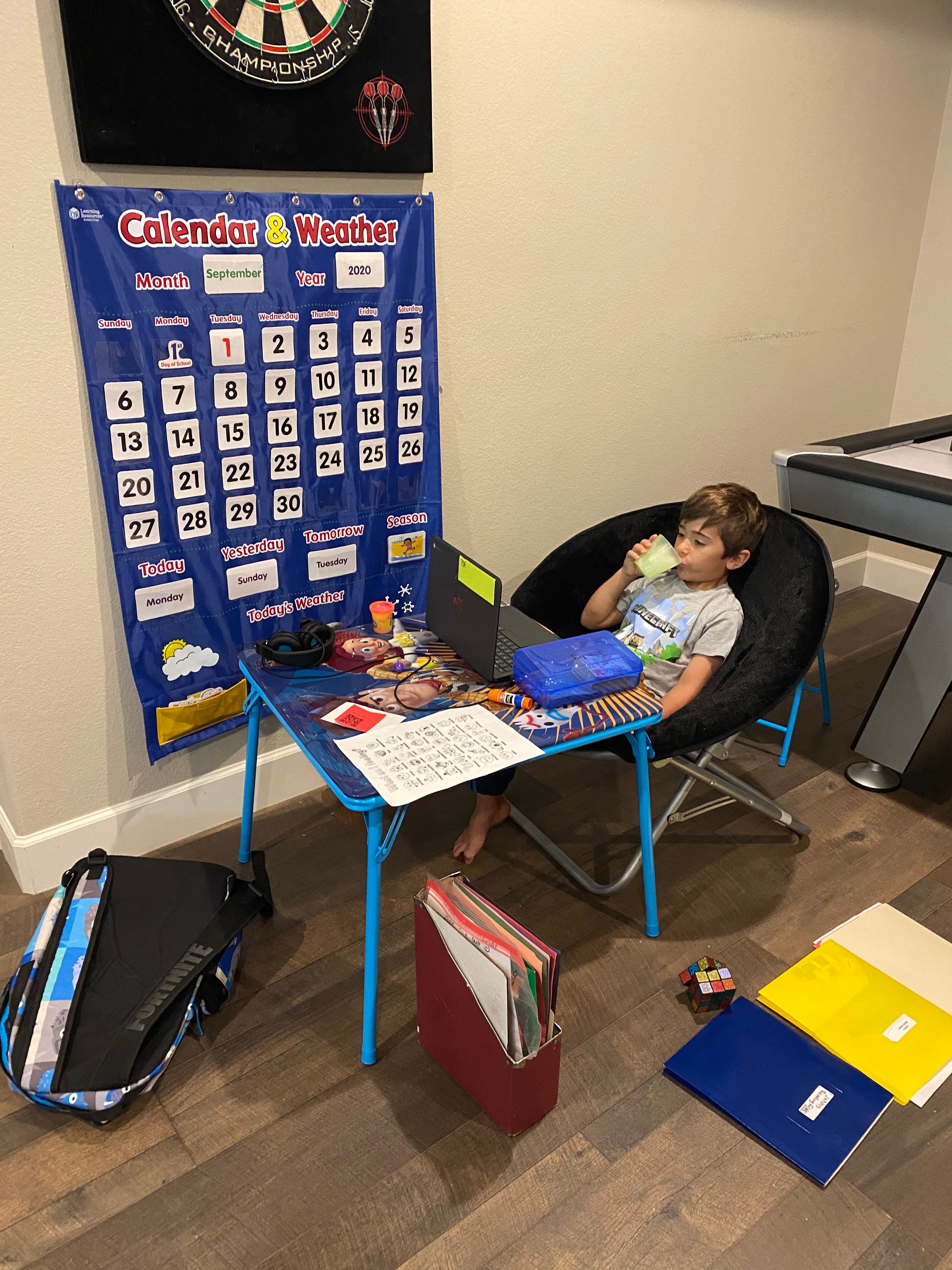
It weird, peering into someone’s kitchen, watching a mom shuffle by in her robe. But it was also intimate. It gave us something everyone was starving for during the pandemic: connection.
As a teacher and a parent, I’m used to hearing about everything COVID took from kids: social skills, reading, and math. The basic belief that school matters. But when I asked my son whether he learned more online or in person, he said online, because of the freedom. When I pushed further and asked what the most important thing he learned in kindergarten was, he said “How to learn.” I might have said tying his shoes — that took forever — but same-same.
I used to think my son’s glass-half-empty nature was just negativity. But often it’s because he’s a problem solver. He has to identify the issue before he can figure it out. Of course, sometimes he’s just whining; he is only 11. But it made me wonder if that’s true for a lot of kids. Maybe online school didn’t feel like a loss to them; it felt like a novelty, a new problem to figure out. And the brain actually does respond to novelty in ways that help us focus and engage. Which might explain why some kids learned more, not less.
It made me wonder: does his generation have a different, maybe more honest, relationship with learning? Maybe being online, and seeing into all those other homes, taught them that school doesn’t only happen in a classroom.
None of this erases the real consequences; we were lucky he was only kinder-1st grade, and I think older students had more dire consequences. But I’ve started thinking about COVID less as a loss and more as a paradigm shift, where the gains are just as worth examining as the losses.
Why not throw this discussion out there to the most (in)famous English teacher on Substack ? How do you see COVID playing out now? What are the takeaways and insights you couldn’t have foreseen?
James (HVR)
From the high school classroom, I saw something very different. I had some students who thrived virtually. Absolutely thrived. They were then terrible in person. That was maybe five percent of my students. Nearly everyone else struggled virtually.
I work in a district with high levels of student need. Many didn’t have WiFi, a place to sit and learn, or someone making sure they were attending classes. I never saw a face, and I never really knew when students were with me.
As an Emotional Disabilities English teacher, most of my students did well without the audience. Depression and anxiety are less a thing when you’re at home with no camera on. In the building, some got into real trouble due to emotional reactions.
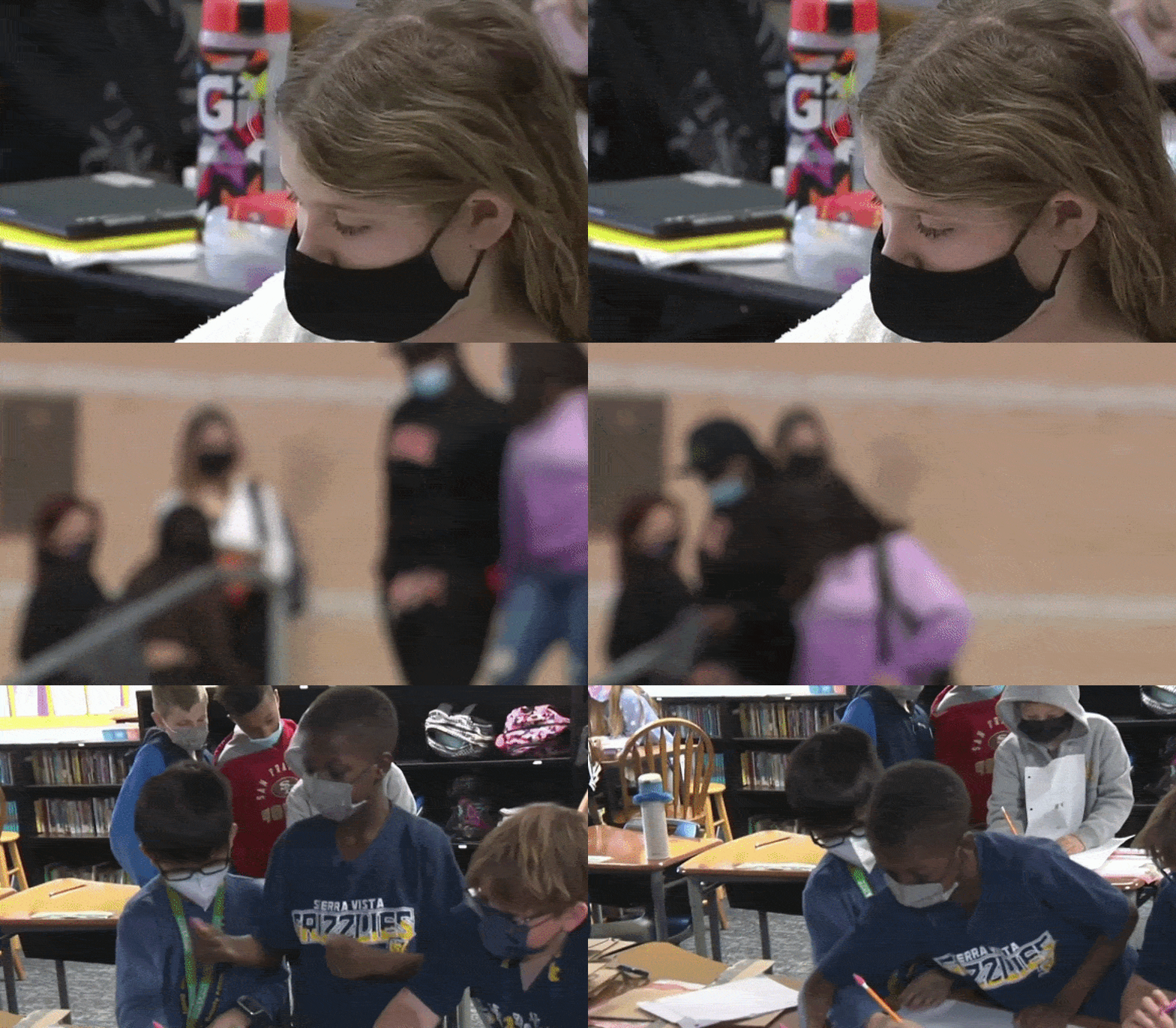
Once we were in person, we had plastic over our desks. We wiped down desks and chairs. They were supposed to wear masks. We were told it could be the CDC in our classrooms if it was found they weren’t wearing them.
It was clear how many students hadn’t really learned but benefitted from all the leniencies the district allowed. Students struggled in the next three years in ways I rarely saw, with many falling six or seven years below grade level in reading. Mandatory testing scores dropped. More “supports” from the central office, though all the employees there just shook their heads too.
Social skills were problematic across the school. There were higher rates of depression and loneliness among students. More abuse in homes due to students being home all the time.
One of the biggest changes was the degree students were (even more) addicted to their devices. It’s what they used every day for a year. The dress code relaxed (didn’t exist) and still doesn’t. Discipline was soft so we could “welcome students” back. We even allowed hats.
In the last two years, I’ve been encouraged by the academic and behavioral growth I’ve seen. These students were younger during virtual and hybrid learning, so they’re used to being in person and catching up.
I’m hopeful for the future. I believe most of my students moved on successfully. I do think some students made the most of it and learned how to learn. That was not true for most students. I hope everyone learned in the long run, found some way to benefit, and that it wasn’t all for nothing.
More on COVID and teaching:

Please leave a comment. A comment and restack does the most for us.
Saving this post and exploring the links below helps my writing reach more people.
michelle ray
Check out my previous post on how I amped up the opening scene of my memoir.
Thank you for reading and supporting me! Check out The Story Space if you want more support and ideas, or just to be part of a community of storytellers.
Story Brunch is this Sunday, June 28, our last gathering of the month. And if you want one-on-one guidance, ask about a Story Discovery session, a perk for paid subscribers.
If you would like to support me, you can buy me a coffee or subscribe to my Substack.

All the Best,
Michelle
James (HVR)
About me ←It’s a link
If you would like to support me and are able, please consider becoming a paid sub. You could also Buy Me a Coffee. If you can’t, it’s free to subscribe and share.
I’m published. Please consider buying my book. I wrote it in real time from my phone while I was in Colombia, while my marriage and life were falling apart, and while I was so ill I wasn’t sure I would make it.
Too Soon et pero Too Late: French Grace. American Collapse. Colombian Care.